
Este artículo aún no está traducido — estás leyendo el original en inglés.
What 3 Months of User Feedback Taught Us About Manga Translation
After 3 months of user feedback, we learned that manga translation isn't just about OCR and AI. Here's how real users changed our product roadmap and inspired our Chrome extension.
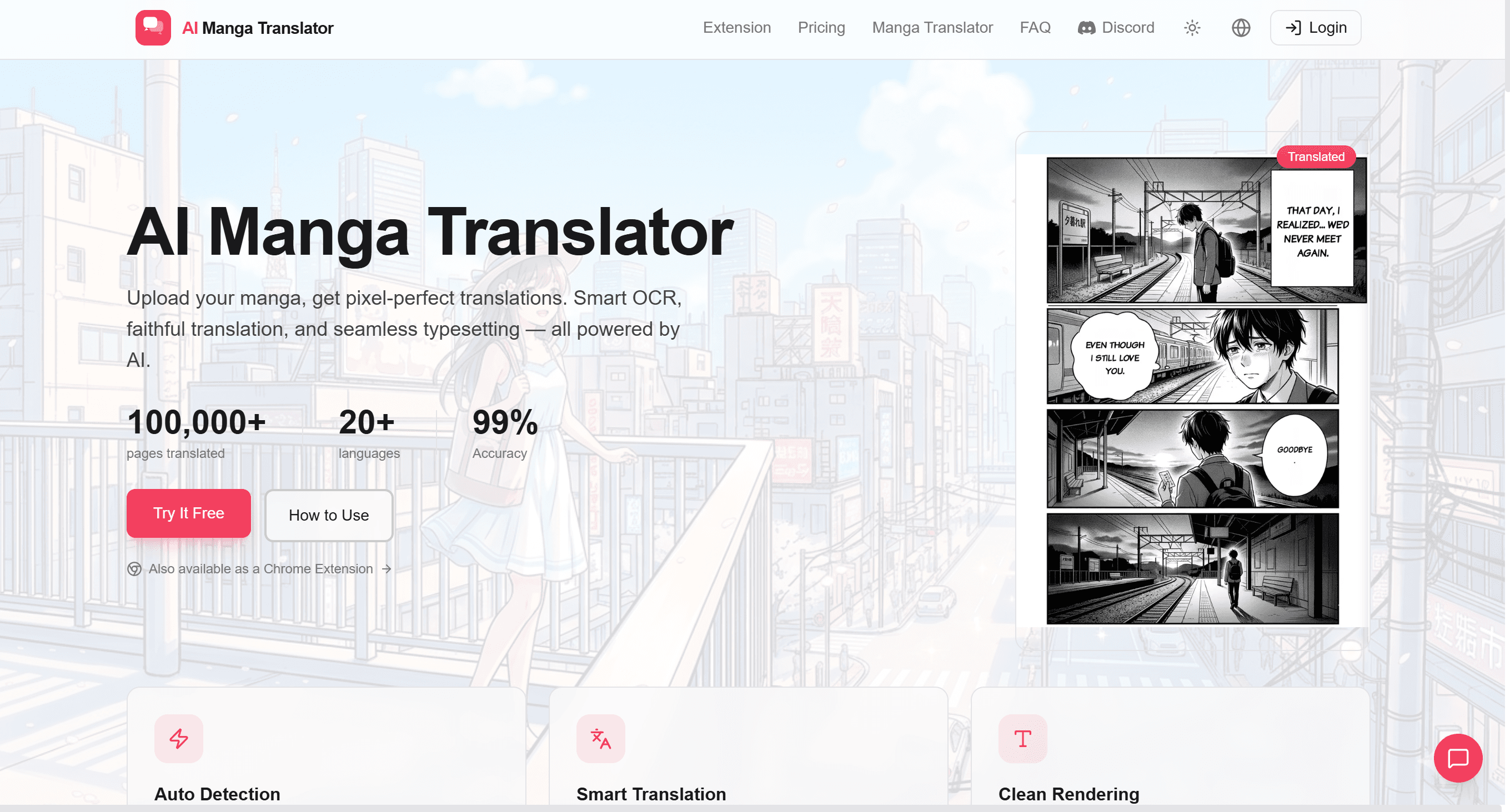
When we launched AI Manga Translator, we thought the hardest problem would be translation.
We spent most of our time thinking about OCR accuracy, language quality, image processing, and how to make manga translation faster.
Three months later, we realized we were focused on the wrong problem.
The biggest lessons didn't come from analytics dashboards or product meetings.
They came directly from users.
Here's what we learned after months of watching people use our manga translation tool in the real world.
Lesson #1: Translation Quality Isn't Everything
Like most founders building AI products, we initially assumed users cared most about translation quality.
Naturally, we focused on:
OCR accuracy
Translation speed
Language support
Image restoration
And while users appreciated improvements in those areas, something unexpected kept appearing in feedback.
Many people weren't complaining about translation quality at all.
They were complaining about workflow.
That was our first surprise.
Lesson #2: Users Care About Convenience More Than We Expected
A typical user journey looked something like this:
Open a manga website
Find a page they want to read
Take a screenshot
Upload it to the translator
Wait for the result
Repeat for the next page
Technically, the process worked.
But reading a full chapter could require dozens of uploads.
For users, that friction added up quickly.
Several people essentially asked the same question: Why can't I just translate manga while I'm reading it?
The more we heard it, the more obvious the problem became.
We had optimized translation.
Users wanted a better reading experience.
Lesson #3: Real User Behavior Is Different From Product Assumptions
Before launch, we imagined most users would:
Download manga pages
Upload images
Translate chapters in batches
Some users did exactly that.
But many didn't.
Instead, they discovered manga through:
Online reading websites
Community forums
Shared links
Social media recommendations
Their manga already lived inside the browser.
Our workflow forced them to leave the browser every time they wanted a translation.
That mismatch became impossible to ignore.
Lesson #4: The Same Feedback Repeatedly Appearing Is a Signal
One piece of startup advice is often repeated: Listen to users.
The problem is that users ask for many different things.
Not every request deserves immediate action.
What matters is repetition.
Over time, we noticed the same theme appearing again and again:
Too many screenshots
Too many uploads
Too many interruptions
When multiple users independently describe the same pain point, it usually means you've found a real problem.
That feedback eventually influenced our roadmap more than any internal planning session.
Lesson #5: Sometimes the Problem Isn't Translation
This was probably the most important lesson.
Initially, we thought we were building a translation tool.
Users showed us something different.
For many readers, translation wasn't the bottleneck.
The bottleneck was everything surrounding translation.
The clicks.
The uploads.
The waiting.
The switching between tabs.
Improving the translation engine by 5% didn't solve those frustrations.
Reducing friction did.
Why We Eventually Built a Chrome Extension
The decision to build a Chrome extension wasn't part of the original plan.
It emerged from months of observing user behavior.
Instead of asking readers to constantly move content into the translator, we wanted to bring the translator closer to where readers already were.
Most manga reading happens inside a browser.
So eventually we asked ourselves: What if the translator lived there too?
That question ultimately led to the launch of the AI Manga Translator Chrome Extension.
The goal wasn't to replace the web app.
The goal was to reduce friction.
What Happened Next
The extension quickly validated what users had been telling us.
People weren't asking for another feature.
They were asking for a smoother experience.
Since launch, hundreds of users have already installed the extension.
The number itself isn't the most important metric.
What's more valuable is what it represents.
It confirms that the workflow problem was real.
And it reinforces a lesson many founders eventually learn:
Users often understand the product better than you do.
Building Through Feedback
One of the easiest traps for software builders is assuming that more features automatically create more value.
The last few months taught us the opposite.
Sometimes the biggest improvements come from removing steps, not adding them.
The most valuable product insights didn't come from brainstorming sessions.
They came from support messages, user comments, and repeated feedback patterns.
In hindsight, many of the best decisions were obvious.
We simply needed enough users to point them out.
Three months ago, we thought we were building a manga translation tool.
Today, we think of it differently.
We're building a better way to read manga across languages.
Translation remains important.
But convenience, accessibility, and user experience matter just as much.
The biggest lesson from the first few months wasn't technical.
It was simple:
Pay attention to what users repeatedly struggle with.
That's usually where your next product idea is hiding.