
この記事はまだ翻訳されていません——英語の原文を表示しています。
Why We Built an AI Video Translator Instead of Another AI Writing Tool
The story behind building AI Video Translator and why we believe multilingual video content is one of the biggest opportunities for creators in the AI era.
If you look at the AI startup landscape today, you'll notice a pattern.
Almost everyone is building writing tools.
AI email writers.
AI blog writers.
AI social media writers.
And while those products can be useful, we weren't particularly excited about building yet another tool that generates text.
Instead, we became interested in a much harder problem:
Language barriers inside video content.
The Internet Is Global. Most Videos Aren't.
The internet allows creators to reach audiences anywhere in the world.
But language still creates invisible walls.
A YouTube creator in the United States may have viewers in Brazil, Japan, Korea, Germany, or France.
An educator might create an incredible course that thousands of people would benefit from.
A startup founder may publish product demos that could attract customers globally.
Yet all of that content is locked behind a single language.
The audience exists.
The content exists.
The connection doesn't.
The Traditional Localization Problem
For years, video localization was expensive.
A creator who wanted multilingual videos typically needed to:
Generate transcripts
Hire translators
Record voiceovers
Synchronize audio
Export multiple versions
The workflow was slow, expensive, and difficult to scale.
Large media companies could afford it.
Most independent creators could not.
We Realized the Workflow Was Broken
The more we looked at video localization, the more we noticed a pattern.
Most people didn't complain about translation quality first.
They complained about workflow.
The process itself was painful.
Too many tools.
Too many exports.
Too many manual steps.
Creators wanted something much simpler:
Upload Video
↓
Choose Language
↓
Get Translated Video
That was the experience we wanted to build.
Why AI Changed Everything
Recent advances in AI made something possible that would have seemed unrealistic a few years ago.
Multiple steps that once required separate tools could now happen together:
Speech recognition
Translation
Subtitle generation
Voice synthesis
Transcript creation
Instead of managing five different workflows, creators could potentially manage one.
This shift wasn't just about speed.
It fundamentally changed the economics of localization.
Building for Real Creators
One lesson we've learned from building AI products is that users rarely care about the underlying technology.
They care about outcomes.
A creator doesn't wake up wanting transcription.
They want more viewers.
An educator doesn't need subtitle files.
They need students who understand their content.
Technology is only valuable when it removes friction.
That's why we focused on creating a workflow that feels straightforward rather than overwhelming.
The Bigger Opportunity
We believe multilingual content is still massively underutilized.
Most creators are competing for the same audience in the same language.
Meanwhile, entire international audiences remain underserved.
The next generation of creators will likely think differently.
Instead of creating content for one language, they'll create content for many languages from day one.
AI makes that possible.
What We're Building
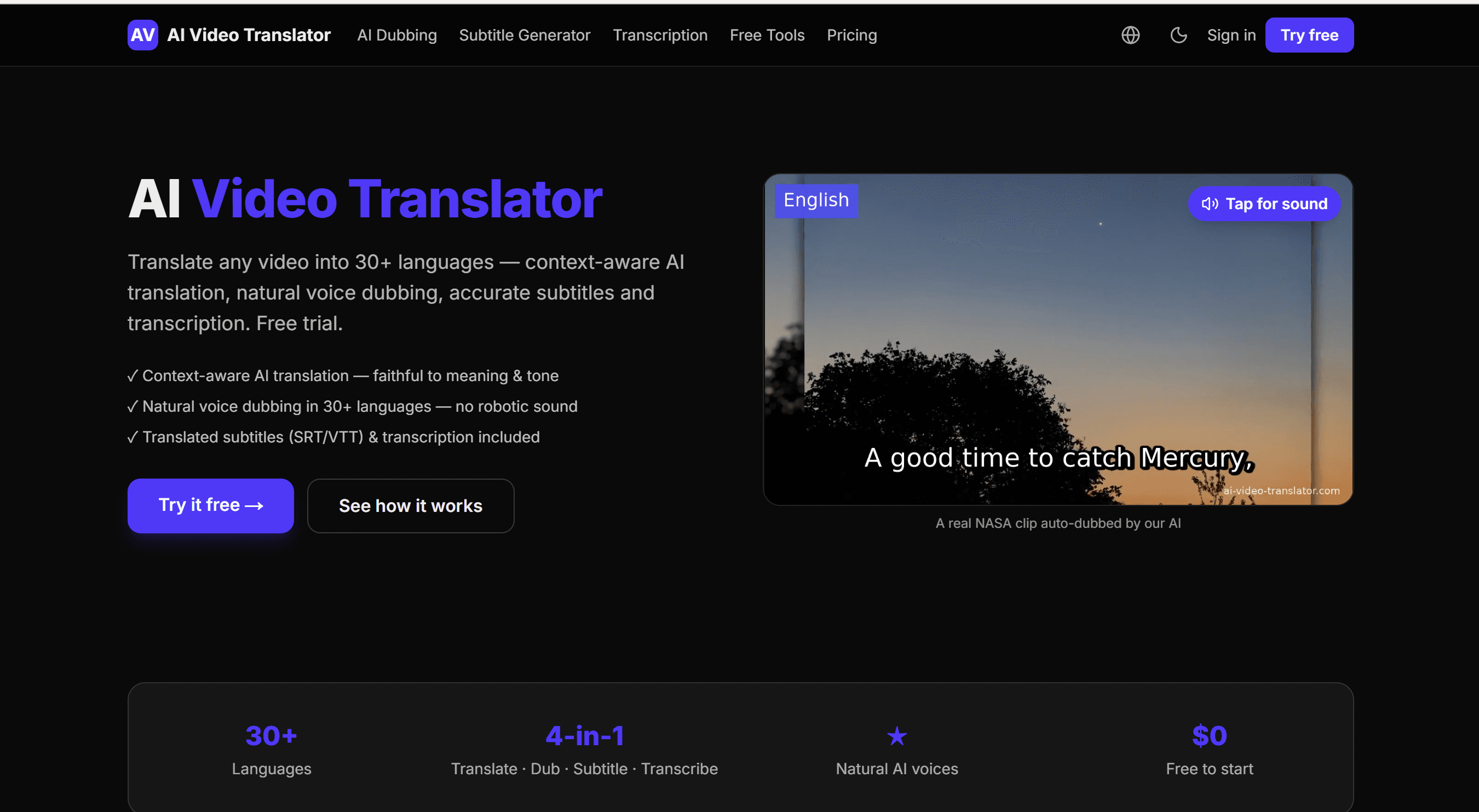
AI Video Translator is our attempt to make multilingual publishing dramatically simpler.
The goal isn't just translation.
It's helping creators make their content accessible to more people without adding complexity to their workflow.
Whether that's subtitles, transcription, dubbing, or translation, the objective remains the same:
Remove language as a bottleneck.
Conclusion
When we started exploring this space, we weren't looking for another AI trend to chase.
We were looking for a problem that still felt unsolved.
Video localization stood out immediately.
Millions of creators already have valuable content.
What they often lack is a practical way to share it with the rest of the world.
That's the problem we're trying to help solve.
And we're only getting started.
Interested in multilingual video publishing?
Explore AI Video Translator:
https://ai-video-translator.com/
More projects: